Clothing was more than just covering for the body to the Nagas back than. Each thread carries a meaning, every shawl has a symbol of identity.
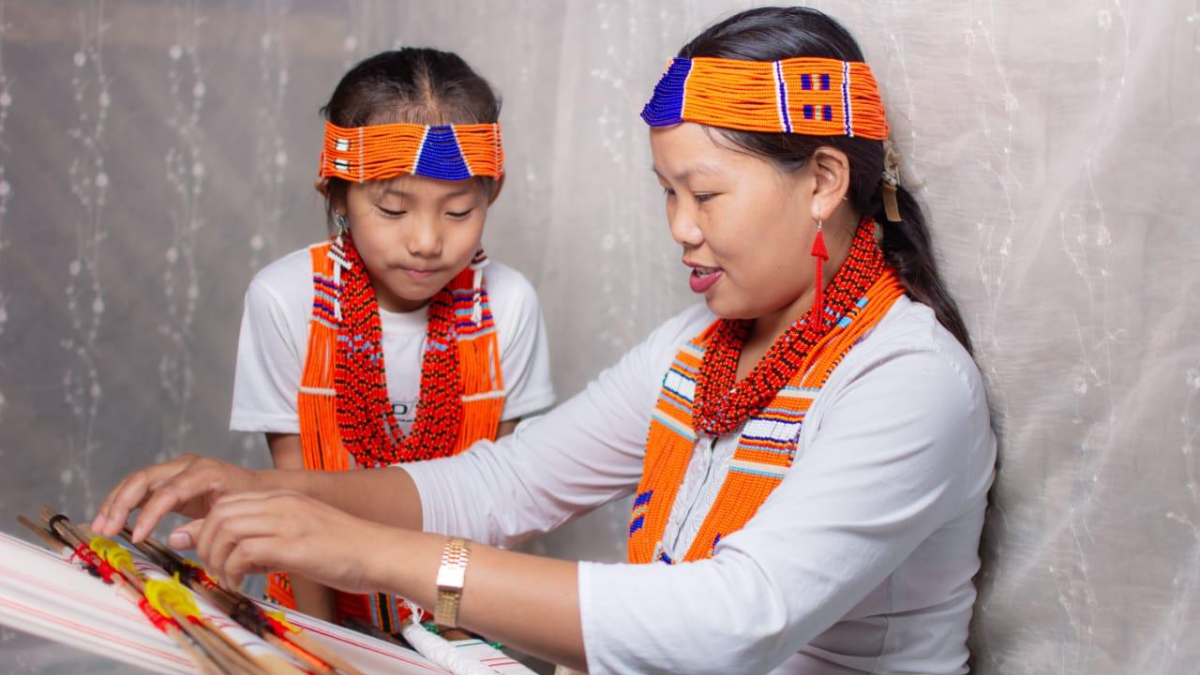
For Konyak Nagas, Women were the custodians of the textile traditions before the advent of factory-made cloths in remote villages. They hand-knitted what they wear that were as much a statement of social identity as they were art.
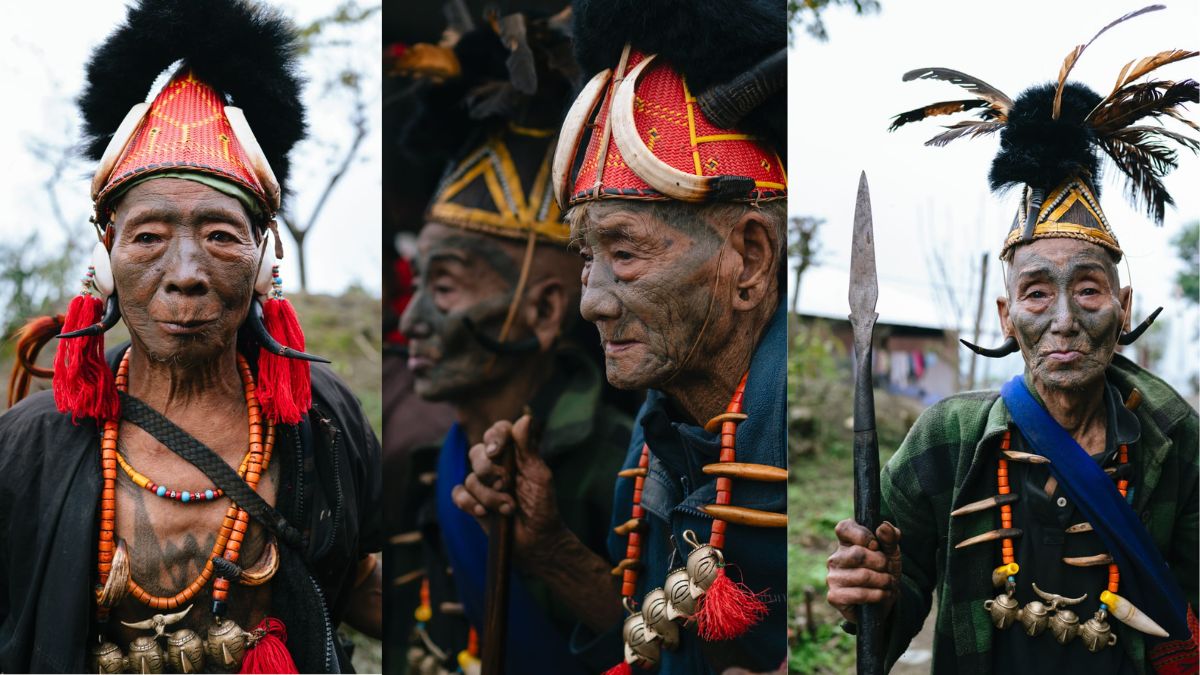
The traditional Konyak clothing was often in bright geometric designs of red, black and white. These colours were not just picked- they represents status, clan affiliations, achievements and cultural belonging.
In many Naga tribes, the shawls were used as a symbol of social differentiation. Some shawls were restricted to warriors, respected elders, or those who had hosted community feasts of merit.
The women were the most important in maintaining these weaving traditions among the Konyaks which is still being the same. The knowledge of textiles was not documented and was learned through generations by observations and oral transmission.
Reflections Of The Designs :
- Warrior achievements
- Clan identity
- Agricultural life
- Nature symbolism
- Spiritual Belives
Konyak textiles are threads of time itself. Woven by hands that remember what books forgot, each shawl holds the weight of warriors, the patience of mothers, and the prayers of people.
In a world rushing toward the machine made ,identity cannot be mass-produced, and heritage is not worn — it is carried.
To preserve Konyak weaving is to preserve a language with no alphabet, a history with no pages, a story that lives only when we choose to wear it, learn it, and pass it on.
The loom may grow quiet, but the story must not.
Today, machine-made garments are replacing traditional weaving practices. Yet artisans continue preserving this legacy through handcrafted shawls, beadwork, and ceremonial garments.
When you wear authentic Konyak textiles, you are not only wearing fashion.
You are wearing memory.
You are wearing ancestral craftmanship.
And perhaps most importantly-
you are wearing a story that survived.